

Why y'all gagging so? She rig it to (not) you every ball
Breaking down how Jason/Salina's elimination fits into the queer Big Brother canon.
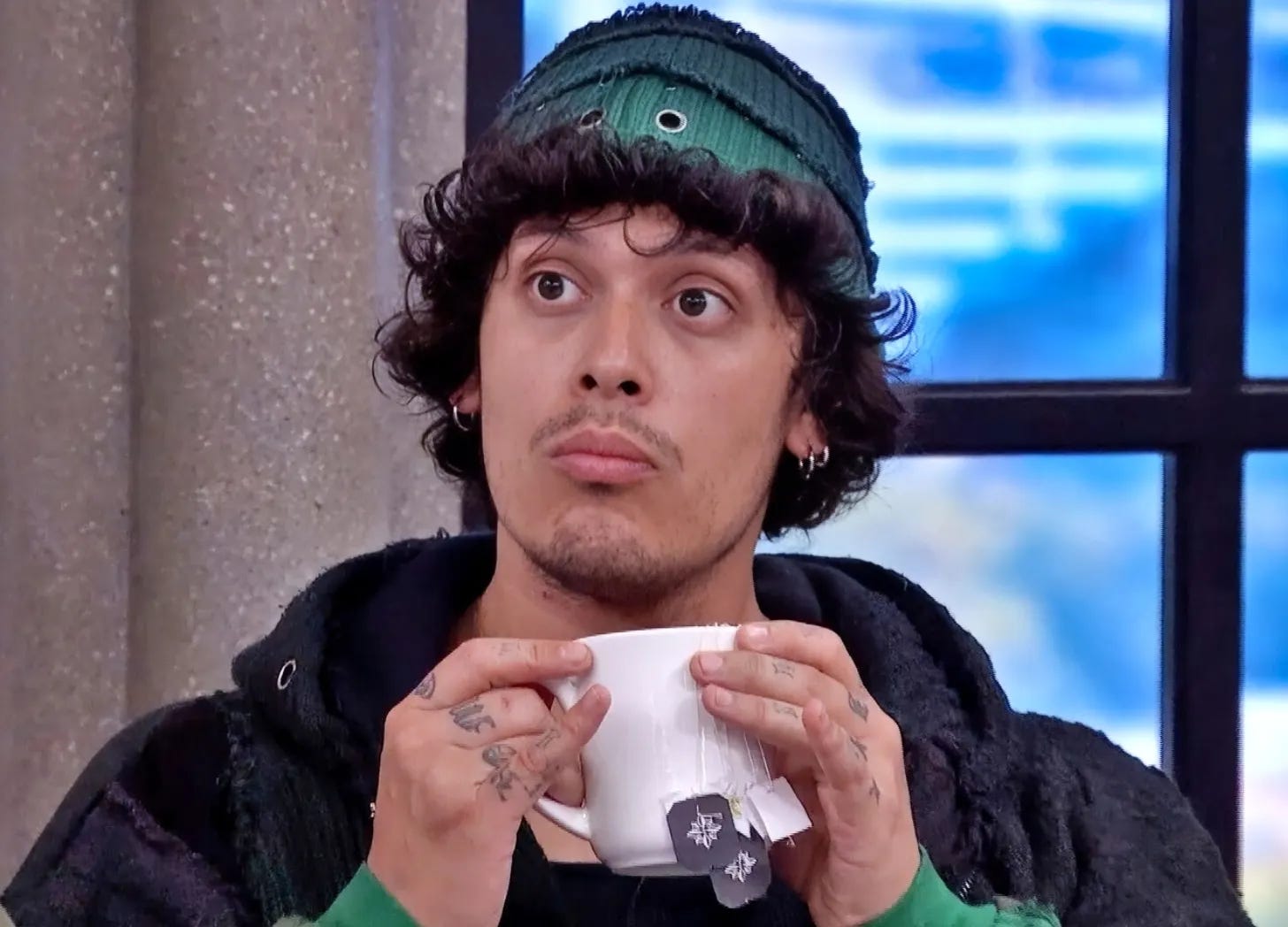
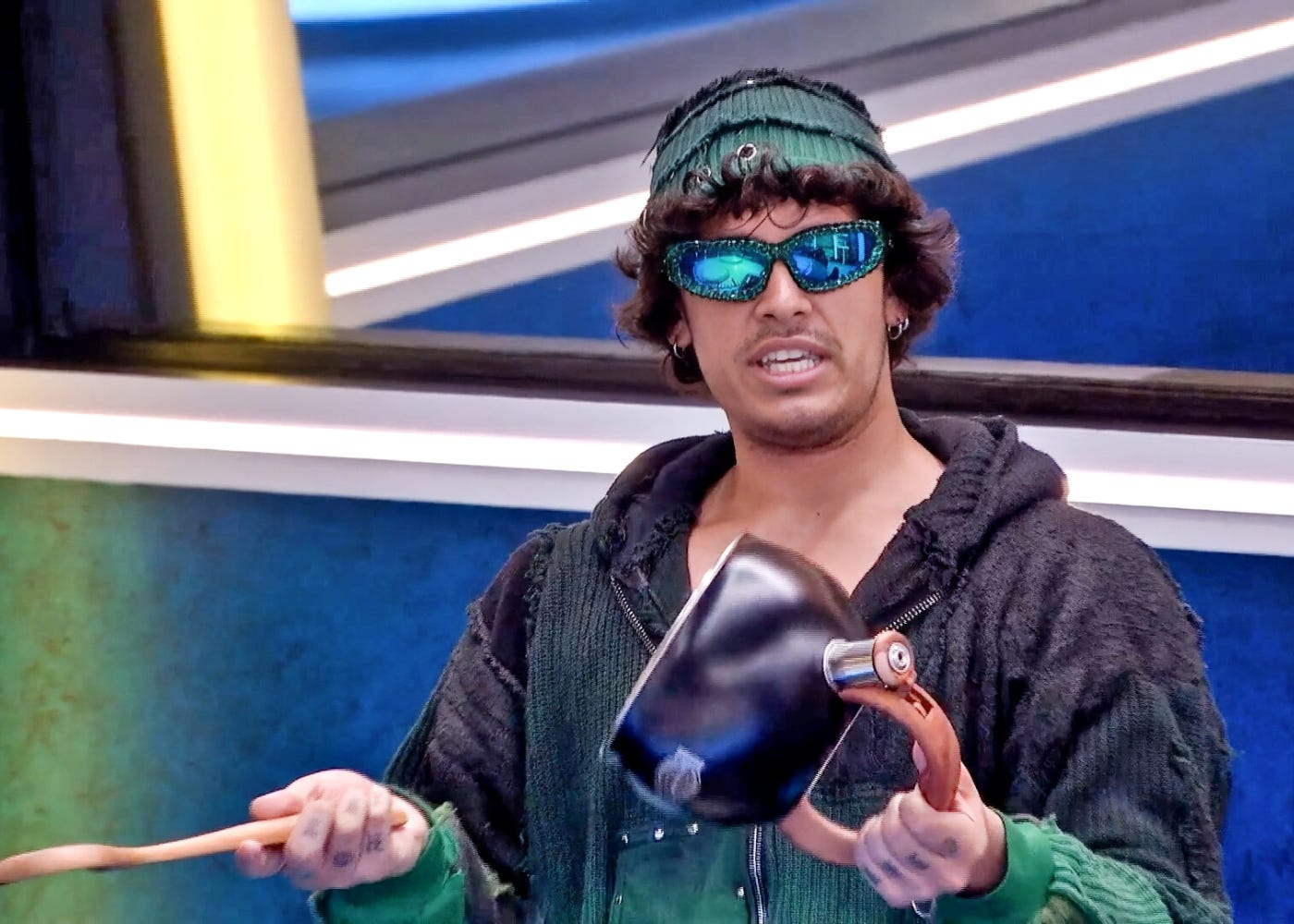
Julie Chen Moonves held a tea kettle while Jason De Puy — otherwise known as Salina EsTitties from RuPaul’s Drag Race and All Stars 11 — exited the Big Brother 28 house as the third evicted houseguest, just 24 days into the game.
The joke was funny enough as a reference to Jason’s final days on BB28. He had walked around the house banging a kettle with a spoon, announcing which players would pair up to chat and strategize, putting tea bags on people’s beds, and hollering at the Diary Room door. He lit up the Big Brother 28 live feeds with chaos, and was unfortunately eliminated in the Thursday, July 30 episode by a unanimous house vote of 12-0. Not one vote thrown in his favor.
Jason was convinced that he would be evicted by the end of the night. And he was right. But Jason was also convinced that he’d exit as one of the most hated Big Brother players of all time. And he was wrong. In fact, Jason left the BB28 house and was met with cheers from the audience, while host Julie Chen Moonves held up a prop referencing his Big Brother run.
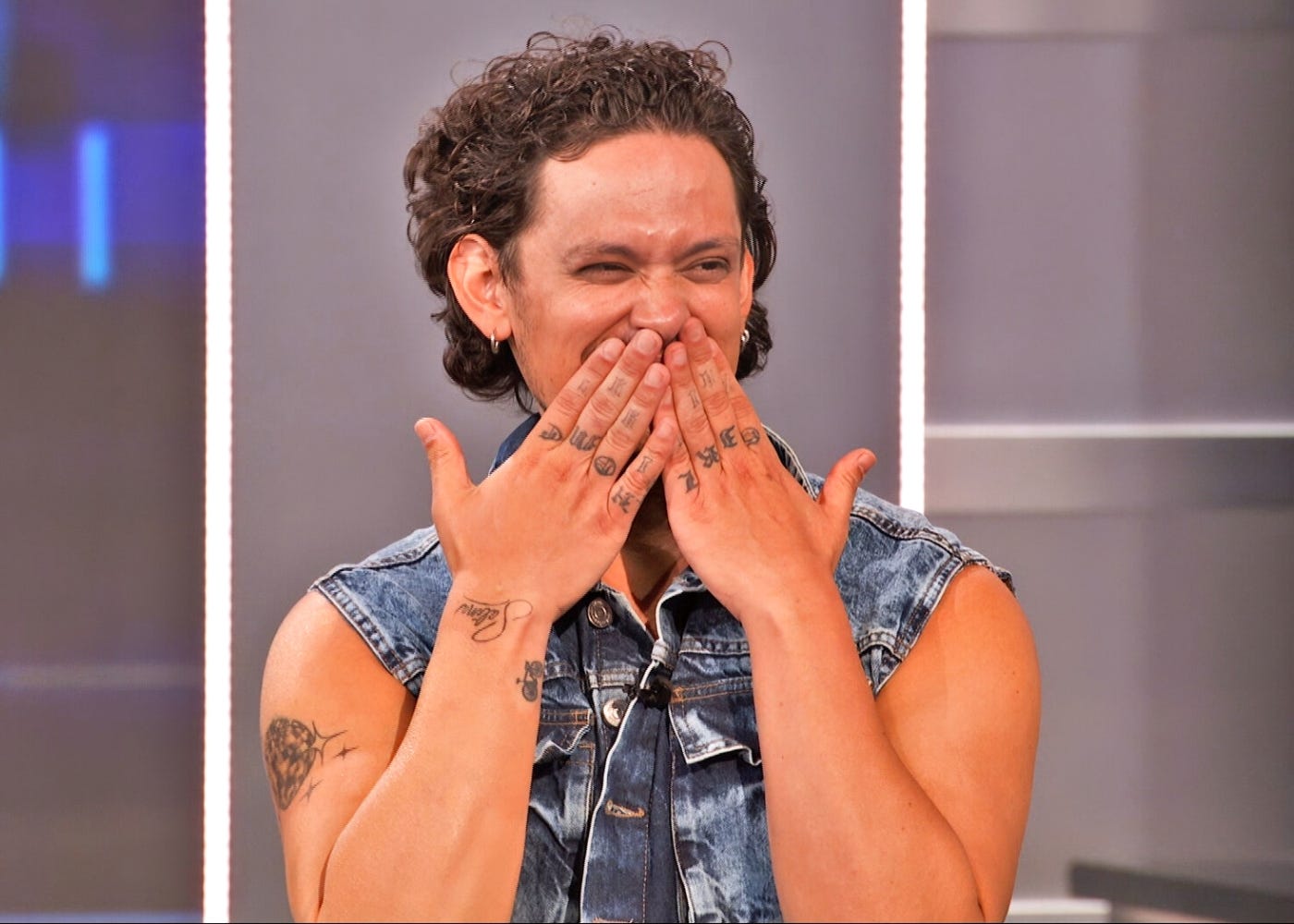
Julie told Jason that America voted him into the top 3 of every “BB Time Capsule” poll. The Drag Race and BB28 alum got teary-eyed and didn’t even believe her for a moment.
But the fans did want a drag queen on Big Brother. And 24 days into the season, the fans did vote for a drag queen to stay on Big Brother 28. For the other houseguests, though, it didn’t cost anything to evict the drag queen by a unanimous vote.
And just like that, I picture the iconic exchange between RuPaul and Valentina in the infamous masked lip sync of season 9. But I picture Mama Ru as Madame Morrible, from Wicked, for some reason, saying: It’s a witch hunt. What part of “No one mourns the wicked” do you not understand?
American Queer Story: Big Brother.
As early as season 2, Bunky Miller received a letter from his male romantic partner that was read on national television. This was a pretty progressive and bold choice for a mainstream reality show airing in 2001, and LGBTQ+ fans of Big Brother deeply appreciated it. During that season, Bunky openly discussed his dreams of marrying his partner, even though gay marriage was still far from being legalized at the time.
Marcellas Reynolds (season 3) became the first out gay Black man cast on a main reality competition series. For the record, this was 2002, so two years before Karamo Brown appeared on MTV’s The Real World: Philadelphia. In the competition, Marcellas won the veto while being eligible for eviction, but declined to use it, and ended up going home fifth — a decision that still haunts gay fans of reality TV to this day.
Ivette Corredero, a top 2 finalist on BB6, was fiercely edited as a side character on the show and within The Friendship alliance that dominated the game. The grand prize went to her ally, Maggie Ausburn, instead, who has some notoriety among OG fans of the show.
But Maggie’s win wasn’t really that complicated. As The Friendship allies dramatically mourned their original leader, Eric Littmann, being evicted, his “secret partner” of the season, Maggie, emerged as a natural successor. So Maggie managed the alliance well enough, and presented herself as a more demure, leader-type version of a female Big Brother player compared to Ivette. A winner edit was born.
Audrey Middleton, the first and only trans houseguest in U.S. Big Brother history, only lasted four weeks into season 17. Two years later, Audrey’s name came up in a season she had nothing to do with (BB19) by houseguests who sat in a hot tub and casually misgendered Audrey while chit-chatting. (The conversation about Audrey was caught in the live feeds, not in the broadcast episodes. The players who misgendered her faced no repercussions while competing. Some of them apologized for their remarks after the season ended.)

In 2018, Kaycee Clark won BB20 with a back-to-back winning streak of five vetoes in the endgame — the most wins out of any U.S. champion. In 2022, out gay player Michael Bruner won nine competitions on BB24, a record he shared with Janelle Pierzina until Jag Bains won seven vetoes a year later. Nonetheless, Michael’s allies blindsided him at sixth place.
When it comes to queer players on Big Brother, let’s just say that the odds are never really in their favor.
The ploy and the Herren: Blame is on the edit?
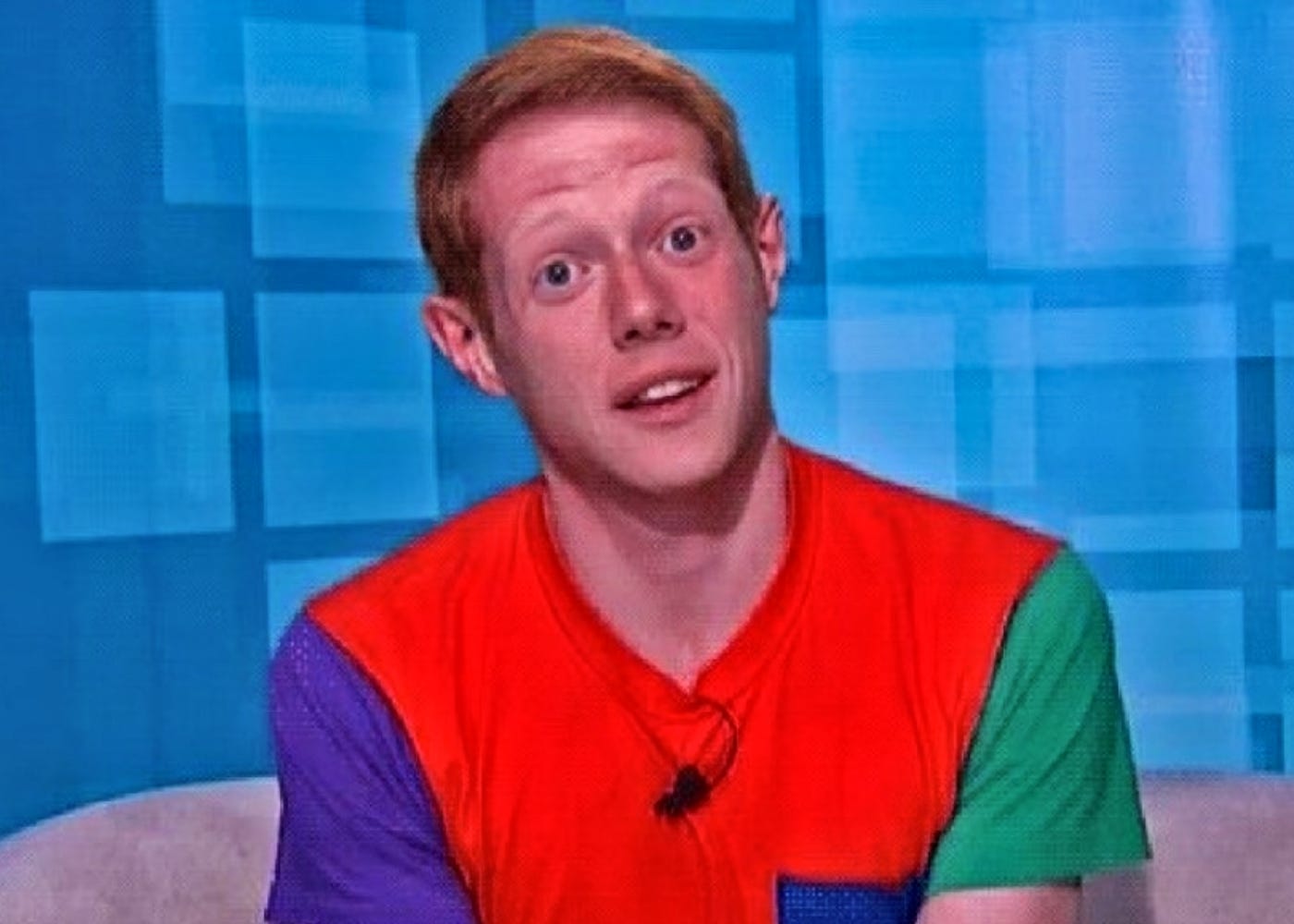
Andy Herren, a college professor from Chicago who competed in season 15, became the first-ever out gay man to win Big Brother (U.S.). The series only has one other out queer winner: Kaycee Clark, who identifies as a lesbian, and won BB20. That’s two people throughout 27 seasons.
In 2020, Herren shared a statement arguing that the production team of Big Brother (U.S.) always favored straight white male players while treating other cast members as side characters. Herren’s X post also specified that gay houseguests are never afforded the luxury of numbers.
“There is always just one,” the Big Brother 15 winner wrote. “They are simply a side character. An obstacle for the straight people to overcome on their way to the finish line. The minority houseguests have to work harder for connections from the start because they are almost always cast to fit a token role.”


There have been Big Brother seasons with more than one queer player, like BB20, which had a historic top 3 with two out gay players: Kaycee Clark and JC Mounduix. However, fans and players had to contend with sexual harassment accusations regarding JC, plus some fandom pandemonium against Kaycee for winning the season over runner-up Tyler Crispen.
For Herren, winning Big Brother in 2013 was a milestone with a stain, too. He happened to win a season with the most openly bigoted Big Brother cast in history, as houseguests uttered slurs on the live feeds and didn’t face in-game repercussions within the show. (Some of them lost jobs, partnerships, and contracts in the real world. However, they weren’t expelled from the show, and weren’t made aware of those real-life consequences while competing, either.)
Herren wasn’t one of those exceptionally problematic players and wasn’t in charge of the slurs being broadcast to viewers. He did use some of those folks as allies and morphed himself to get along with them. Those choices have been weaponized against him to this day, though, even though every single Big Brother mastermind in history behaves exactly the same way.
Except that those houseguests were not expelled by producers and were the only remaining players in a game about outplaying people (“numbers”). It’s a game about convincing others to be on your side, whether you like them or not.
And that is why Herren’s general point still stands.
In 28 seasons, an all-women alliance has never worked on Big Brother (U.S.), though it has worked in other countries. Drag Race star Courtney Act won Celebrity Big Brother UK in a way that feels unattainable on the American show. And an absurd number of people are still being cast on huge reality shows only to then be swiftly removed for using racial slurs. As recently as 2023 for Big Brother, and in the record-breaking 2026 season of Love Island USA, too.
After making history as the first out gay winner of Big Brother, Herren reached a new conclusion on how “minority houseguests” are cast and edited on the show.
“The ‘greats’ of the game are ALL straight white males. Dan [Gheesling], Derrick [Levasseur], Will [Kirby]. But when you break down their games vs mine, they are not very different whatsoever. In fact, you could argue that my game is among the best and even cleaner than some of these legends. I was NEVER in danger of going home, and every single person in the house thought I was on their side until they were walking out the door, and even then they usually still thought I wasn’t the one who had backstabbed them (I was).”
The Kamu-flage privilege of straight men.
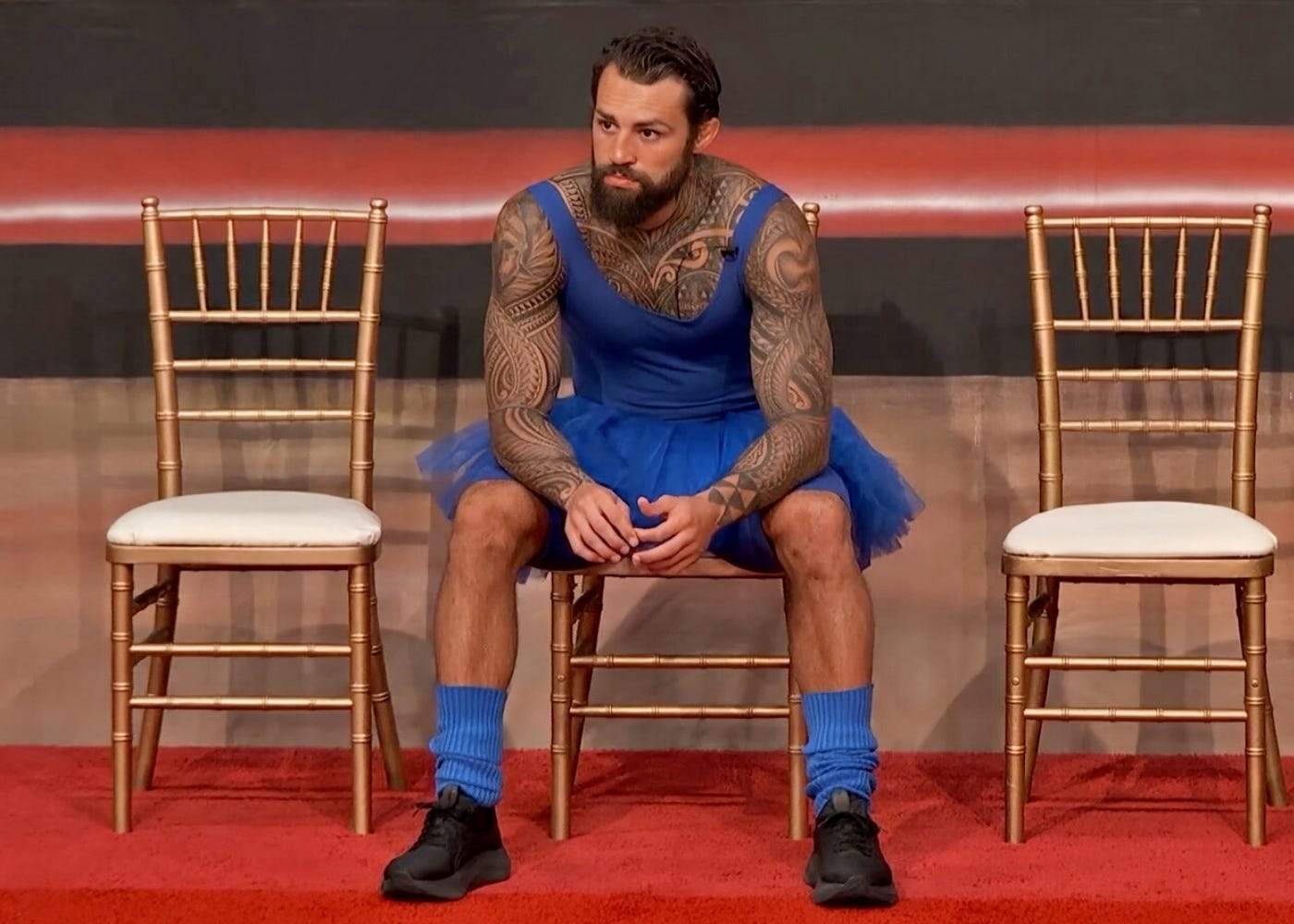
Kamu Kirk, a 32-year-old MMA fighter who’s competing on Big Brother 28, won Head of Household (HOH) in week 3 and turned Jason into his primary target. While certain game-related moves were brought up to justify that decision, the BB28 live feeds told a different story.
During his HOH week, Kamu told fellow houseguest Rick Devens in the feeds: “Bro, miss me with the drag stuff. Miss me. I’m still an MMA guy, and I have an image to uphold,” which was reported by Entertainment Weekly.
Kamu’s social media activity prior to the season didn’t look great either, which created an intense discourse of its own.
Altogether, Kamu’s pre-season posts and in-house behavior on Big Brother were deemed “homophobic” by Frankie Grande — who competed on BB16 and is one of Jason’s best friends.
“Um. What the fuck is this horseshit?! Get these homophobic bigots out of the fucking house IMMEDIATELY. Both of them,” Frankie wrote on X. “Ew, this conversation makes me sick to my stomach. I’m disgusted. This better be the biggest thing ever when I wake up tomorrow or I’m flipping a table… fuck. Ew. Gross. #BB28.”


Herren’s aforementioned X post also observed what he perceives as a favorable treatment of straight white men on Big Brother. For example, the BB15 winner revealed that his early-days Diary Room confessionals felt superficial, even though he was already strategizing his way to the grand finale.
“When I was in the Diary Room, I was asked about how cute I thought the men in the house were. I was asked to compare competitions to gay sex acts. I was asked to give funny soundbites. I was NEVER asked about my strategy in the early days even though I was running everything…So when a straight male is strategic, he’s afforded every luxury in the world and put on a pedestal. Yet when a gay man is doing it, he’s ignored and made a side character.”
Herren then referenced “houseguests like Jeff Schroeder, Dick Donato, and Cody Nickson,” who were “repeatedly invited back” despite being accused of problematic behaviors.
“Dick verbally and physically assaulted women during his initial season and the show edited him to be a hero and invited him to play again. Jeff said that gay people shouldn’t be teachers because they’re pedophiles and not only did he get a HERO EDIT but he was invited back multiple times to Big Brother and to The Amazing Race and he did pre-season interviews for houseguests on Big Brother seasons after his. It was SO fun being interviewed by a man who I knew thought I shouldn’t be a teacher because I’m gay. Cody called trans contestant Audrey Middleton “it” and “tranny” and REFUSED TO APOLOGIZE after the show and was invited to participate on The Amazing Race (which he won). He was awarded a million dollars by CBS after being a transphobe and I have never even gotten to go back and host a competition.”
One short stay in the Big Brother house.
The nationwide racial justice protests following the May 2020 murder of George Floyd by a police officer prompted a commitment from CBS to cast 50% BIPOC players on its reality shows starting with new seasons filmed in 2021 and 2022. The measure worked right away: Big Brother 23 had enough Black players to form the Cookout alliance, and Xavier Prather became the show’s first Black winner in history after 22 seasons of the series being on air.
Xavier’s victory was a triumph for the reality TV genre. Yet it also felt ironic and upsetting to see how casting biases and straight white male advantages had indeed played against non-white players for 22 seasons in one of the biggest reality shows on television.
“Tons of people complained, and the things they said were distasteful, like, ‘What happened to our show?’” Jeff Probst, the Emmy Award-winning host of Survivor — a sister reality competition series to Big Brother on CBS — told Vanity Fair in January when asked, six years later, about that commitment to diversity from CBS. Probst added, “We took it as a beautiful challenge, and as much as anything in the history of Survivor, it changed Survivor. It’s absolute proof that representation makes a difference.”
The same Vanity Fair story unfortunately confirmed that the mandate for diverse casting is “no longer in place,” so it barely reached five years. It’s also worth reiterating that this effort was only about racial diversity (50% BIPOC), which was a great step toward inclusion, but didn’t consider sexual orientation, gender identity, size, age, disabilities, or any other identifiers. Even during the most diverse era of Big Brother of all time, the “one queer person per season” dilemma was never actually challenged.
In March 2025, GLAAD published an open letter written by Peppermint (The Traitors, RuPaul’s Drag Race) and Frankie Grande (Big Brother), and co-signed by dozens of reality TV alumni like Taylor Hale, Derrick Levasseur, and Xavier Prather.
The open letter urged reality TV makers to “move beyond tokenism” instead of casting just one out queer person each season, which resulted in contestants who felt isolated and misunderstood by their costars, pressured to represent an entire community, and required to drop their games to educate straight people on LGBTQ+ matters (when/if applicable).
It’s been a year and a half since Frankie and Peppermint published that letter. Since then, out queer people — particularly RuPaul’s Drag Race alumni — keep being early-outs on mainstream reality shows despite being prominently seen in promotional materials in the pre-season hype. Many of those eliminations were also born out of misunderstandings, which is disappointing, to say the least.
Here’s to hoping that Jason’s high-profile elimination from BB28 sparks enough of a conversation to enact change before the show reaches its 30th anniversary.
Big Brother 28 airs new episodes every Sunday, Wednesday, and Thursday on CBS.